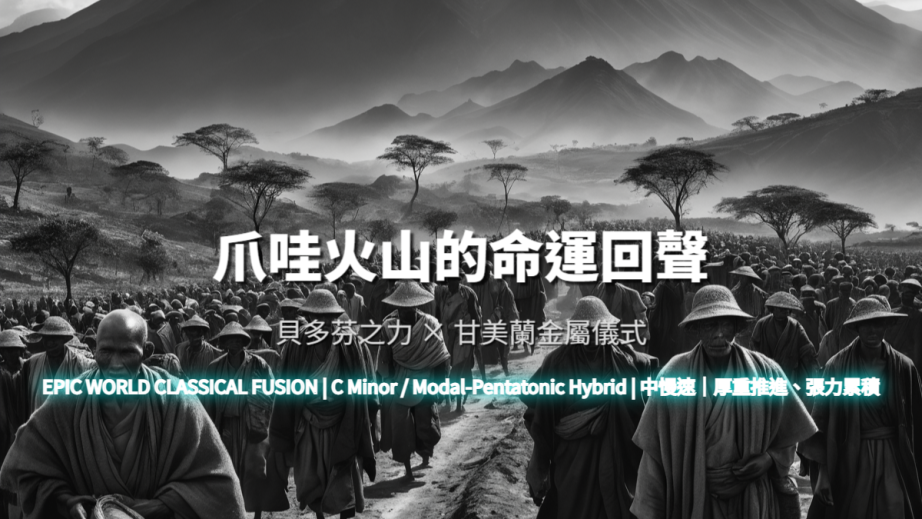
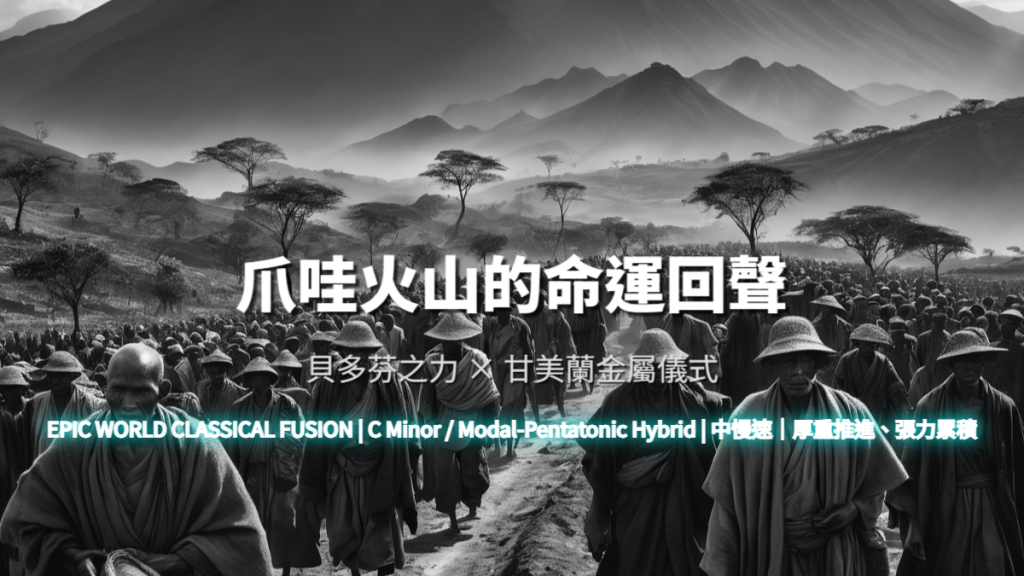
爪哇火山的命運回聲
貝多芬之力 × 甘美蘭金屬儀式
Context
Context
風格定位為「史詩儀式型世界古典融合」,避免浪漫主義誇張,轉而追求重量、重複與不可逆的推進感。
大提琴使用重弓、低把位、厚實音色,減少裝飾性技巧;甘美蘭金屬琴以循環型動機構成時間感;Kendang 控制整體呼吸;Gong Ageng 標記結構轉折;低音弦樂僅作地層震動感。
None(純器樂,無人聲)。
Intro(地層低鳴)→ Fate Motif Emergence(命運動機轉化)→ Volcanic Accumulation(能量堆積)→ Ritual Confrontation(人與自然對話)→ Eruption Hold(爆發後的靜止)→ Ending(正式終止)。
* 明確指定 slow-build structure,避免過早高潮。
* 使用 metallic percussion descriptors 讓甘美蘭不被西方化。
* 大提琴段落加入 bow pressure 描述以強化重量感。
* 利用低頻持續音取代和聲進行。
* 結尾指定 collective stop,避免自動淡出。
* 控制節奏穩定性,讓張力來自密度而非速度。
* Fate Motif Transformation – 命運動機轉譯
* Ritual Metallophones – 儀式型金屬敲擊
* Volcanic Build – 火山式能量累積
* Human vs Nature – 人與自然對話
* Formal Ending – 明確結構終止
* Beethoven symphonic energy and fate motif analysis
* Javanese gamelan metallophone structures
* Cultural views of volcanoes in Indonesia
* Ritual music and natural symbolism
(A deep silence is broken by a low cello resonance, as if sound itself is emerging from beneath the ground. Each bow stroke is heavy, deliberate, and slow.)
[Section I][Fate Motif][Human Voice]
(The cello introduces a repeating, weighty figure, not aggressive but unavoidable, representing the presence of fate as a constant force.)
[Section II][Metallic Earth][Gamelan Entry]
(Metallic percussion enters gradually, each strike resonating long after impact. Time begins to feel circular rather than linear.)
[Development][Volcanic Accumulation]
(Layers increase in density without increasing speed. The sensation is pressure building, heat gathering, breath being held.)
[Ritual Confrontation][Human vs Nature]
(The cello and gamelan exchange gestures, not competing but acknowledging each other’s presence within the same space.)
[Climax][Eruption Hold]
(A massive collective resonance fills the space, then abruptly stops, leaving a charged silence.)
[Ending][Final Cadence][No Fade Out]
(All sound resolves into a final, unified strike. The resonance is allowed to decay naturally, confirming a complete and formal ending.)
