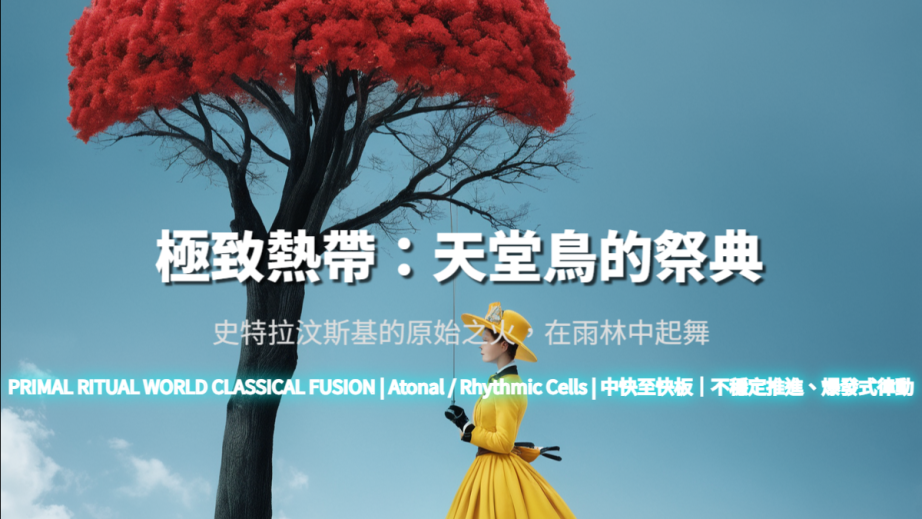
極致熱帶:天堂鳥的祭典
史特拉汶斯基的原始之火,在雨林中起舞
Context
Context
馬友友的大提琴在此不再歌唱,而是敲擊、拉扯、爆裂。弓不只是產生音高,而是製造衝擊。Kundu 鼓的節奏,並非被「引用」,而是作為音樂結構的地基。天堂鳥的求偶舞,不是裝飾性的意象,而是一種生存行為——誇張、耗能、近乎瘋狂。這首作品要呈現的,正是那種不被理性修飾的生命狀態:音樂不是為了被理解,而是為了被承受。
風格定位為「高強度、非調性、儀式型原始能量融合」,避免旋律主導,全面以節奏與動態對比構成。
大提琴使用強烈節奏弓法、斷弓、重擊弓與不規則重音;Kundu 鼓建立多層脈動;部落打擊樂形成交錯節奏網絡;低音弦群以音塊方式堆疊;環境聲暗示雨林密度與空氣壓力。
None(純器樂,能量完全由節奏與身體感傳遞)。
Intro(儀式召喚)→ Rhythmic Ignition(節奏點燃)→ Polyrhythmic Hunt(多重節奏追逐)→ Bird of Paradise Dance(天堂鳥求偶舞)→ Ecstatic Overload(能量過載)→ Ending(祭典斷止,正式終止)。
* 指定 aggressive rhythmic articulation,避免旋律自動生成。
* 使用 asymmetrical meters 與 irregular accents。
* 大提琴描述為 percussive string instrument。
* Kundu 鼓設定為 layered tribal pulse,而非單一節拍。
* 動態對比來自密度突變,而非漸強。
* 結尾指定 ritual cut-off stop,避免自然衰減。
* 明確要求 physical intensity 與 raw texture。
* Primal Rhythm – 原始節奏
* Ritual Energy – 儀式能量
* Percussive Cello – 打擊式大提琴
* Polyrhythm – 多重節奏
* Formal Ending – 明確斷止結構
* Igor Stravinsky “The Rite of Spring” rhythmic analysis
* Kundu drum traditions of Papua New Guinea
* Bird of Paradise mating rituals
* Ritual music and primal human expression
(The space is tense and expectant. Sparse, heavy gestures appear, as if a ritual circle is being formed.)
[Section I][Rhythmic Ignition]
(The cello launches sharp, aggressive patterns. Each attack feels intentional and dangerous.)
[Section II][Polyrhythmic Hunt]
(Kundu drums enter in overlapping cycles. No single pulse dominates; rhythm becomes a moving terrain.)
[Section III][Bird of Paradise Dance]
(Rhythms accelerate and fracture. Patterns flare with sudden accents, mimicking display, competition, and ecstatic movement.)
[Ecstatic Overload][Physical Threshold]
(The density peaks. Sound feels almost uncontainable, pushing the listener to sensory limits.)
[Ending][Final Cadence][No Fade Out]
(All sound is cut off abruptly and together. The silence that follows confirms a complete, formal, and ritual conclusion.)
