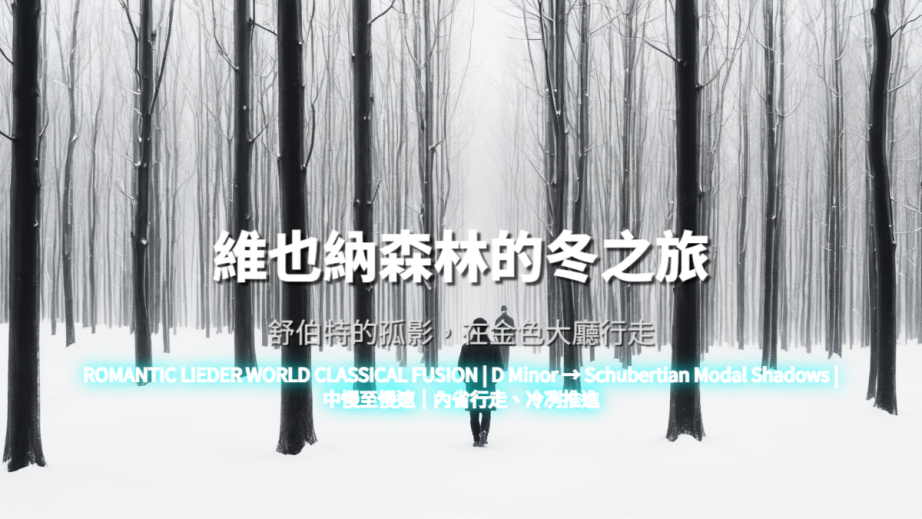
維也納森林的冬之旅
舒伯特的孤影,在金色大廳行走
Context
Context
馬友友以大提琴承接原本的人聲線,讓「語言」退後,「呼吸」上前。弓弦的摩擦取代字詞,停頓成為詩句。金色大廳的聲學,讓每一次弱音都能被看見;管風琴的低吟,如遠方冬風,與旅人並行卻不干擾。咖啡館文化的影像不是裝飾,而是時間的框架——沙龍、孤坐、未完成的對話——共同構成維也納式的精緻憂鬱。
風格定位為「聲樂精神轉譯的浪漫主義獨白融合」,重視旋律線的呼吸、弱音層次與空間殘響。
大提琴以歌唱式長弓、節制顫音與細微滑音呈現人聲替代;管風琴選用柔和音栓,僅作低頻氣息;鋼琴以泛音與殘響點染;避免密集和聲。
None(無詞;以弓弦與停頓取代歌詞)。
Prelude(霜降靜默)→ Wanderer Theme(旅人主題)→ Footsteps in Snow(雪地行走)→ Café Reflections(沙龍回望)→ Night Organ Breath(夜之管風琴)→ Ending(冬途暫歇,正式終止)。
* 指定 lied-like phrasing without lyrics,避免旋律被器樂化拉直。
* 使用 dynamic micro-shaping 描述弱音層次。
* 管風琴設為 distant breath register。
* 讓 silence 成為句法,避免連續填滿。
* 控制速度穩定行走感,避免浪漫化加速。
* 結尾指定 quiet resolved stop,避免淡出。
* Lieder Without Words – 無詞藝術歌曲
* Winter Introspection – 冬日內省
* Salon Melancholy – 沙龍憂鬱
* Vocal-to-Cello Transfer – 人聲轉譯大提琴
* Formal Ending – 明確結構終止
* Schubert Winterreise song cycle analysis
* Lied transcription for solo instruments
* Vienna café culture in the 19th century
* Musikverein hall acoustics
(The hall holds its breath. A sense of cold clarity frames the space.)
[Section I][Wanderer Theme]
(The cello enters alone, singing a restrained, searching line that moves forward without certainty.)
[Section II][Footsteps in Snow]
(Phrases advance steadily, each note separated by quiet, as if walking through deep winter.)
[Reflection][Café Memories]
(Soft resonances suggest interior warmth and distant conversation, fleeting and unresolved.)
[Night Breath][Organ Shadow]
(A low, gentle breath underlines the cello, deepening the night without overt motion.)
[Ending][Final Cadence][No Fade Out]
(A final, tender phrase settles and stops completely. Silence follows, marking a formal and intentional ending.)
