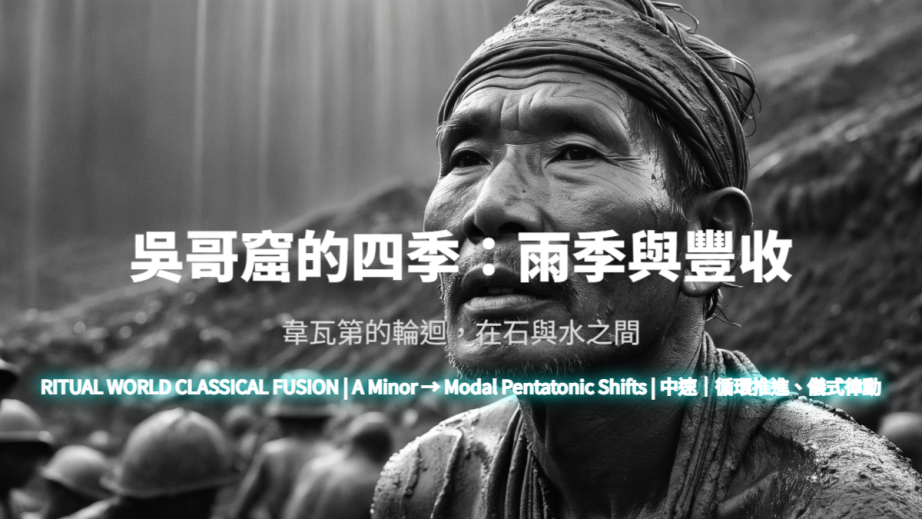
吳哥窟的四季:雨季與豐收
韋瓦第的輪迴,在石與水之間
Context
Context
馬友友的大提琴在此不再是抒情主角,而是「時間引路人」,以清楚而有方向感的節奏型,牽引整個 Pinpeat 樂隊前行。雨季不是混亂,而是累積;豐收不是爆發,而是完成。音樂在此不追求戲劇性對比,而是讓重複本身成為敘事,讓土地說話。
風格定位為「季節循環導向的儀式型古典融合」,強調節奏重複、動機回返與結構對稱。
大提琴使用清楚節奏弓法與重複型音型;Roneat Ek 建立高頻循環;Skor Thom 與 Gong Circle 標記季節段落;低音 Drone 模擬大地穩定感;避免過度和聲變化。
None(純器樂,敘事由節奏與層次完成)。
Intro(季風將至)→ Monsoon Cycle(雨季循環)→ Water Saturation(大地吸收)→ Growth Pulse(生長節奏)→ Harvest Ritual(豐收儀式)→ Ending(季節完成,正式終止)。
* 使用 cyclical motif descriptors,避免線性發展。
* 指定 ritual tempo consistency,保持穩定推進。
* 大提琴設定為 rhythmic lead 而非 lyrical solo。
* Pinpeat 樂器分層描述,避免被合併成一般打擊樂。
* 動態來自層次增加,而非速度變化。
* 結尾指定 ritual final cadence,避免淡出。
* Seasonal Cycle – 季節循環
* Ritual Ensemble – 儀式型合奏
* Rhythmic Cello Lead – 節奏導向大提琴
* Monsoon Imagery – 雨季意象
* Formal Ending – 明確結構終止
* Vivaldi Four Seasons structural analysis
* Cambodian Pinpeat ensemble traditions
* Angkor Wat seasonal water systems
* Ritual music and agricultural cycles
(A low sense of anticipation fills the space. Subtle rhythmic gestures suggest distant thunder and gathering clouds.)
[Section I][Rain Cycle]
(Repetitive rhythmic figures establish the arrival of rain. Sounds return again and again, steady and patient.)
[Section II][Water Saturation]
(Layers deepen. Resonance increases as if the ground is absorbing sound and water simultaneously.)
[Development][Growth Pulse]
(Agentle forward motion emerges. Patterns feel alive, suggesting plants rising and fields responding.)
[Harvest Ritual][Completion]
(The ensemble reaches its fullest density, not loud but complete, marking the fulfillment of the cycle.)
[Ending][Final Cadence][No Fade Out]
(All instruments align in a final, grounded strike. The resonance decays naturally, then stops together, marking a formal and complete ending.)
