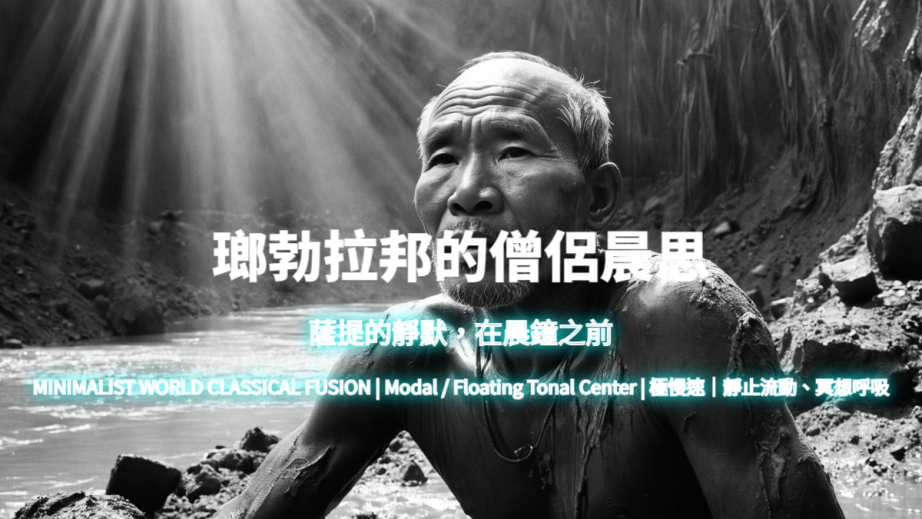
瑯勃拉邦的僧侶晨思
薩提的靜默,在晨鐘之前
Context
Context
風格定位為「極簡、冥想導向的靜態世界古典」,避免情緒推進,重視留白與自然殘響。
大提琴使用無顫音長弓、極慢換弓;避免裝飾音;保留指尖與弓毛摩擦細節;誦經聲作為遠距環境層,不主導;Drone 僅在極低音量下維持空間感。
Atmospheric Buddhist Chant Texture Only(非主導、無歌詞指示)。
Pre-dawn Silence(黎明前靜默)→ First Tone(單音出現)→ Breath Cycles(呼吸循環)→ Chant Alignment(誦經重疊)→ Stillness Plateau(完全靜止)→ Ending(自然收束,正式終止)。
* 指定 ultra-slow tempo 與 sparse phrasing,避免自動旋律化。
* 使用 long decay reverb,但降低 wet level,保留清晰邊界。
* 描述 bow change noise 以增加人性存在感。
* 將 chant 設為 distant texture,避免被當作主旋律。
* 避免任何節奏性語言,保持時間模糊。
* 結尾指定 full stop after resonance,避免淡出。
* Minimalist Stillness – 極簡靜止
* Meditative Flow – 冥想流動
* Sacred Atmosphere – 神聖空間
* Sparse Solo Cello – 稀疏大提琴
* Formal Ending – 明確而安靜的終止
* Erik Satie minimalist aesthetics
* Buddhist morning chanting practices in Laos
* Luang Prabang alms-giving ritual
* Silence and space in meditative music
(The piece begins in near silence, inviting the listener to notice the absence of sound, the slow breath of the space, and the faint sense of approaching morning.)
[Intro][First Tone Emergence]
(A single cello note appears softly, sustained with unwavering bow pressure, allowed to fully resonate and decay without interruption.)
[Section I][Breath Cycles]
(Notes enter one at a time, separated by generous pauses. Each tone feels like an inhale and exhale, calm and deliberate.)
[Section II][Chant Alignment]
(A distant chanting texture becomes perceptible, not synchronized, drifting independently as if carried by the air outside the hall.)
[Development][Stillness Plateau]
(The cello maintains sparse gestures. Time feels expanded, almost motionless, as sound and silence balance equally.)
[Reflection][Morning Light]
(The density remains minimal. Subtle changes in tone color suggest the gradual arrival of dawn without narrative movement.)
[Ending][Final Cadence][No Fade Out]
(A final cello tone is sustained briefly, then released. All sound stops together, leaving complete silence to mark a formal and intentional ending.)
