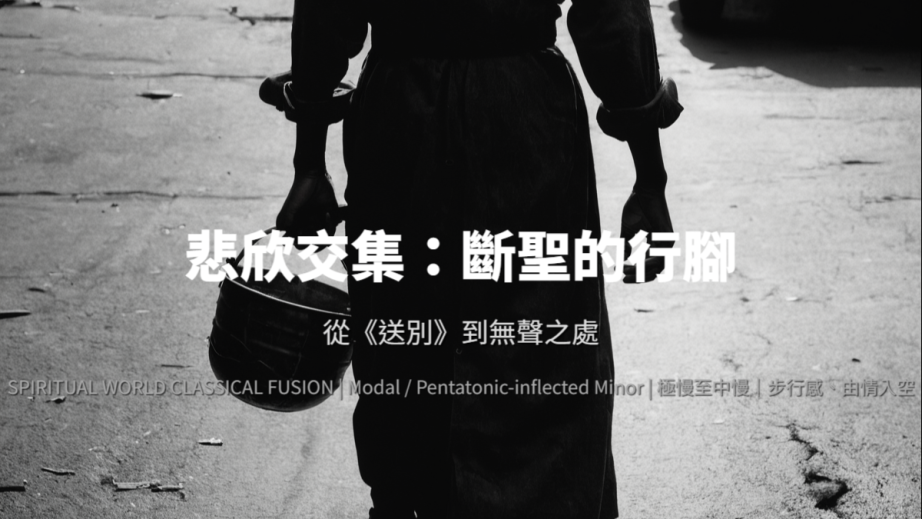
悲欣交集:斷聖的行腳
從《送別》到無聲之處
Context
Context
馬友友的大提琴在此不再是演奏者,而是一位行腳者。作品以《送別》的旋律碎片作為起點,卻刻意不完整呈現,讓旋律如記憶般時隱時現。青年李叔同的浪漫,存在於旋律輪廓之中;晚年弘一法師的空性,則體現在大量留白與簡化。江南水鄉的絲竹聲響,並非伴奏,而是環境——如同平湖的水、蓮池的風,讓音樂最終走向不言而喻的平淡。
風格定位為「靈性導向、極度節制的東西方靜態融合」,避免任何戲劇性推進,重視時間、留白與自然共鳴。
大提琴使用極慢長弓、弱顫音甚至無顫音;避免完整旋律反覆;絲竹以派斯風格呈現,音量極低;簫僅在段落轉換時出現;環境水聲作為結構的一部分。
None(純器樂,禪意由空間與留白承載)。
Prelude(蓮池靜水)→ Fragmented Farewell(《送別》碎片)→ Youthful Memory(才子回聲)→ Ascetic Reduction(斷捨離)→ Walking Silence(行腳無言)→ Ending(悲欣同在,正式終止)。
* 指定 fragmented melody descriptors,避免自動補全旋律。
* 使用 ultra-slow phrasing,讓時間成為主體。
* 絲竹設定為 environmental texture,而非節奏層。
* 明確描述 silence as structure,防止旋律過密。
* 大提琴加入 bow friction 與 finger noise 描述,強化人性存在。
* 結尾指定 complete stop in stillness,避免任何淡出。
* Fragmented Farewell – 解構式《送別》
* Spiritual Reduction – 靈性簡化
* East-West Stillness – 東西方靜止融合
* Walking Meditation – 行腳冥想
* Formal Ending – 明確而安靜的終止
* Li Shutong (Hongyi) musical and spiritual transition
* Song “Farewell” cultural analysis
* Jiangnan Sizhu (派斯) performance practice
* Music and Buddhist philosophy of impermanence
(The piece begins in near silence, with only a faint sense of space and water, preparing the listener to slow down.)
[Section I][Fragmented Farewell]
(A cello phrase hints at a well-known melody, but stops short, leaving its identity unresolved.)
[Section II][Youthful Memory]
(Short melodic gestures appear and fade, suggesting remembrance without attachment.)
[Section III][Ascetic Reduction]
(Phrases become fewer, tones simpler. Silence grows between notes.)
[Walking Meditation][Wordless Journey]
(The cello continues with sparse, steady gestures, like footsteps on a long path.)
[Ending][Final Cadence][No Fade Out]
(A final, solitary tone is released into silence. All sound stops completely, marking a formal and intentional ending.)
