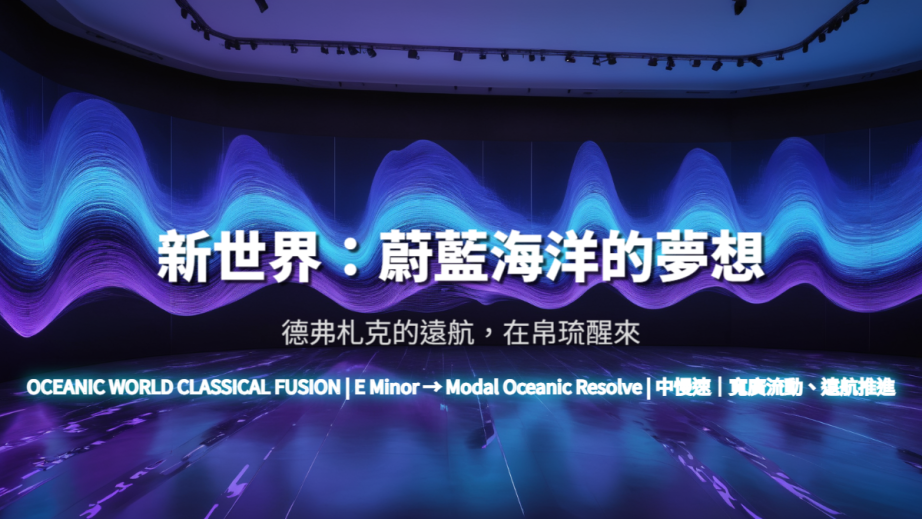
新世界:蔚藍海洋的夢想
德弗札克的遠航,在帛琉醒來
Context
Context
馬友友的大提琴在此化身為航海者的內心獨白:旋律帶著鄉愁,也帶著希望,隨著海浪起伏而呼吸。舞台不再只是室內空間,而是延伸到珊瑚礁、潮汐與傳說之中。木雕工藝的視覺語彙提醒我們,文化與自然從來不是分離的資產;音樂則成為一座橋,將人類的夢想安放在必須被珍惜的蔚藍之上。
風格定位為「抒情、寬廣的海洋交響式世界古典融合」,避免急促節奏,重視旋律延展與空間層次。
大提琴以歌唱式長弓為主,旋律清晰而溫潤;弦樂群僅作波浪般的和聲推進;木質打擊模擬船身與潮汐節律;銅管 Pad 提供地平線的光;環境海浪聲與音樂自然交錯。
None(純器樂,海洋意象由旋律與環境聲承載)。
Intro(黎明的海面)→ New World Theme Reimagined(新世界主題再現)→ Ocean Drift(海流漂移)→ Coral Memory(珊瑚記憶)→ Horizon Hope(地平線希望)→ Ending(守護的誓言,正式終止)。
* 指定 lyrical oceanic phrasing,避免旋律被切碎。
* 使用 long-arc melody descriptors,支撐遠航感。
* 海浪聲設為 call-and-response texture,而非背景噪音。
* 控制動態於中等範圍,避免過度戲劇化。
* 和聲以慢速轉位呈現,營造潮汐推進。
* 結尾指定 hopeful formal cadence,避免自然淡出。
* Oceanic Lyricism – 海洋抒情性
* New World Motif – 新世界動機
* Environmental Dialogue – 環境對話
* Horizon Build – 地平線推進
* Formal Ending – 明確結構終止
* Dvořák “From the New World” thematic analysis
* Palau National Marine Sanctuary initiatives
* Ocean soundscapes and music interaction
* Cultural symbolism of seafaring and protection
(The piece begins with a wide sense of space, as if the listener is standing at the edge of the ocean before sunrise. Gentle environmental textures suggest distant waves, soft wind, and the slow awakening of the horizon, with no immediate musical gesture, allowing anticipation to build.)
[Section I][New World Theme – Reimagined][Lyrical Emergence]
(The solo cello introduces a familiar yet transformed melodic contour, stretched and softened, carrying the emotional memory of departure and discovery. Each phrase is allowed to breathe fully, rising and falling like the surface of the sea, with long pauses that emphasize distance.)
[Section II][Ocean Drift][Tidal Motion]
(Supporting textures enter gradually, creating a slow harmonic drift. The cello continues its lyrical path, now accompanied by subtle wave-like motion beneath it, suggesting travel without urgency and movement without conquest.)
[Section III][Coral Memory][Environmental Dialogue]
(Wooden textures and gentle percussive pulses appear, evoking the presence of coral reefs and living structures beneath the water. The cello responds with warmer, lower-register tones, acknowledging depth, fragility, and accumulated time.)
[Section IV][Horizon Hope][Expansive Ascent]
(Harmonic color begins to open. The cello’s lines grow slightly brighter, not louder, as if the horizon is slowly revealing light. The sense is not triumph, but reassurance—an understanding that care and patience lead forward.)
[Section V][Guardianship Reflection][Sustained Presence]
(Music holds steady in a balanced state. Phrases repeat with small variations, reinforcing commitment and continuity. Environmental sounds and musical tones coexist evenly, suggesting harmony between human intention and natural rhythm.)
[Ending][Final Cadence][No Fade Out]
(The cello articulates a final, clear melodic statement, supported by a stable harmonic foundation. All sound resolves together into a calm, luminous stillness. The resonance is allowed to settle naturally before stopping completely, marking a formal and intentional ending that affirms hope and responsibility.)
