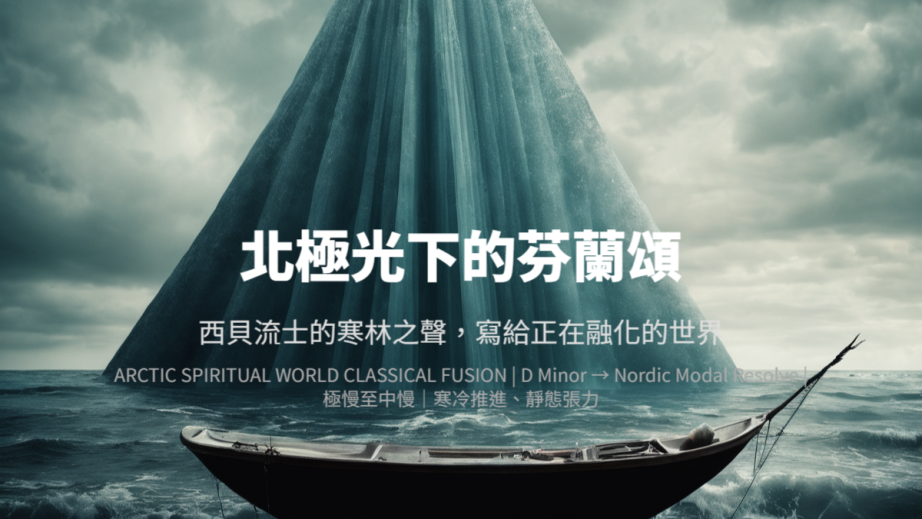
北極光下的芬蘭頌
西貝流士的寒林之聲,寫給正在融化的世界
Context
Context
馬友友的大提琴在此不歌唱旋律,而是「站在風中」。低音弦的拉奏如冰層摩擦,旋律線被刻意拉長、稀釋,彷彿隨時可能被寒風帶走。因紐特人的 Katajjaq 喉音唱法,並非作為表演,而是作為自然現象的一部分——它模仿風、模仿呼吸、模仿生存。這不是文化融合的展示,而是一份聲音檔案:當冰川退去,至少還留下它曾經如何回響。
風格定位為「極地紀錄型、自然主導的精神世界古典融合」,避免旋律密度,強調空間、寒冷感與物理聲響。
大提琴使用低把位、重弓壓與極慢弓速;避免顫音;Katajjaq 作為節奏性呼吸層而非旋律;Drone 模擬冰層低頻;環境聲(風、冰裂)成為結構元素。
Inuit Katajjaq Throat Singing Texture Only(非歌詞、非主旋律)。
Polar Silence(極地靜默)→ Frozen Motif(冰層動機)→ Wind & Breath Interaction(風與呼吸)→ Aurora Expansion(極光展開)→ Melting Stillness(融化的靜止)→ Ending(記錄完成,正式終止)。
* 指定 arctic minimal pacing,避免旋律自動推進。
* 使用 glacial bow pressure 描述,強化物理摩擦感。
* Katajjaq 設定為 rhythmic breathing texture。
* 利用極低頻 Drone 建立空間尺度。
* 描述 silence and cold air as active elements。
* 結尾指定 absolute stop after decay,避免任何淡出。
* Arctic Soundscape – 極地聲景
* Glacial Minimalism – 冰層極簡
* Ancestral Breath – 祖靈呼吸
* Climate Memory – 氣候記憶
* Formal Ending – 明確結構終止
* Jean Sibelius Nordic nationalism and nature symbolism
* Inuit Katajjaq throat singing traditions
* Ilulissat Icefjord climate change research
* Soundscape documentation in extreme environments
(The piece begins in near-total silence, as if the frozen landscape is holding its breath.)
[Section I][Frozen Motif]
(A low cello tone emerges slowly, rough and resistant, like sound carved from ice.)
[Section II][Wind and Breath]
(Guttural, breath-driven textures appear intermittently, echoing the rhythm of wind across snow.)
[Development][Aurora Expansion]
(Subtle harmonic light spreads above the sustained tones, suggesting the movement of northern lights.)
[Melting Stillness][Fragile Balance]
(Textures thin further. Sound feels temporary, as if it could vanish at any moment.)
[Ending][Final Cadence][No Fade Out]
(A final cello resonance is released and allowed to decay completely. All sound stops, leaving only silence as a record of presence.)
