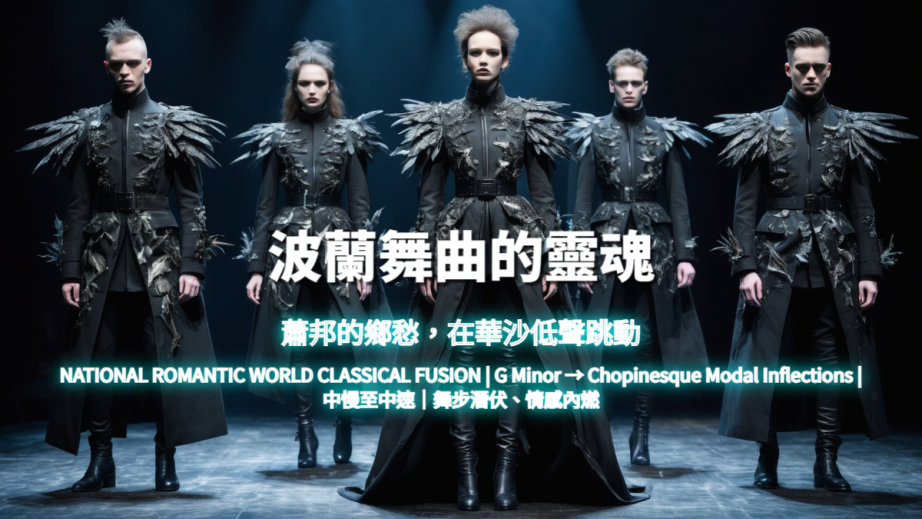
波蘭舞曲的靈魂
蕭邦的鄉愁,在華沙低聲跳動
Context
Context
馬友友的大提琴在此不是英雄,而是一位誠實的見證者。旋律線深沉而內收,像是在壓抑中仍保持尊嚴。原本鋼琴與大提琴的對話,被重新配置為「記憶與土地」的對位——Suka 的加入,讓蕭邦音樂中常被忽略的泥土感浮現:舞曲不是裝飾,而是身份。這不是復古,而是讓蕭邦回到他真正出發的地方。
風格定位為「內省型民族浪漫主義的學院派世界古典融合」,避免表層舞蹈化,強調節奏潛伏與情感重量。
大提琴以歌唱式長弓、深層音色與節制顫音呈現;Suka 採用粗獷弓法與直接音頭,保留民間摩擦感;鋼琴僅以泛音與低音暗示和聲骨架;保留音樂廳自然殘響。
None(純器樂,舞曲精神內化於節奏)。
Intro(靜默的故鄉)→ Sonata Reminiscence(奏鳴曲記憶)→ Hidden Dance Pulse(潛伏舞步)→ Folk Dialogue(民間對話)→ Patriotic Undercurrent(愛國暗流)→ Ending(舞曲止步,正式終止)。
* 指定 late-Chopin emotional restraint,避免過度浪漫化。
* 大提琴描述為 lyrical but weighted voice。
* Suka 設為 earthy folk counterline。
* 使用 subtle dance rhythm descriptors,而非明顯節拍。
* 動態集中於中低至中高,避免英雄式高潮。
* 結尾指定 dignified quiet stop,避免淡出。
* Polish Soul – 波蘭靈魂
* Hidden Dance – 隱藏舞步
* National Melancholy – 民族憂鬱
* Folk-Classical Dialogue – 民俗與古典對話
* Formal Ending – 明確結構終止
* Chopin Cello Sonata Op.65 analysis
* Polish national dances in Chopin’s music
* Suka fiddle historical performance practice
* Warsaw musical and cultural heritage
(A quiet, expectant stillness opens the space, as if the city itself is listening.)
[Section I][Sonata Memory]
(The cello unfolds a deep, reflective line, carrying weight and vulnerability in equal measure.)
[Section II][Hidden Dance Pulse]
(Subtle rhythmic tension appears beneath the surface, restrained but persistent.)
[Development][Folk Dialogue]
(Earthy string textures enter, rougher and more direct, grounding the lyrical line.)
[Patriotic Undercurrent][Remembering Ground]
(The music deepens, not louder but more certain, affirming belonging.)
[Ending][Final Cadence][No Fade Out]
(A final, dignified phrase settles and stops completely. Silence follows, confirming a formal and intentional ending.)
