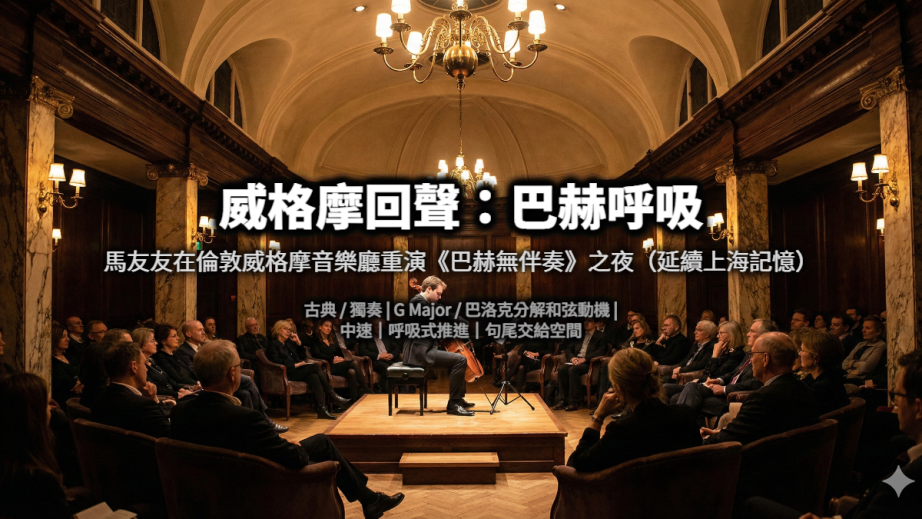
古典 / 獨奏
威格摩回聲:同一首巴赫,換一種呼吸
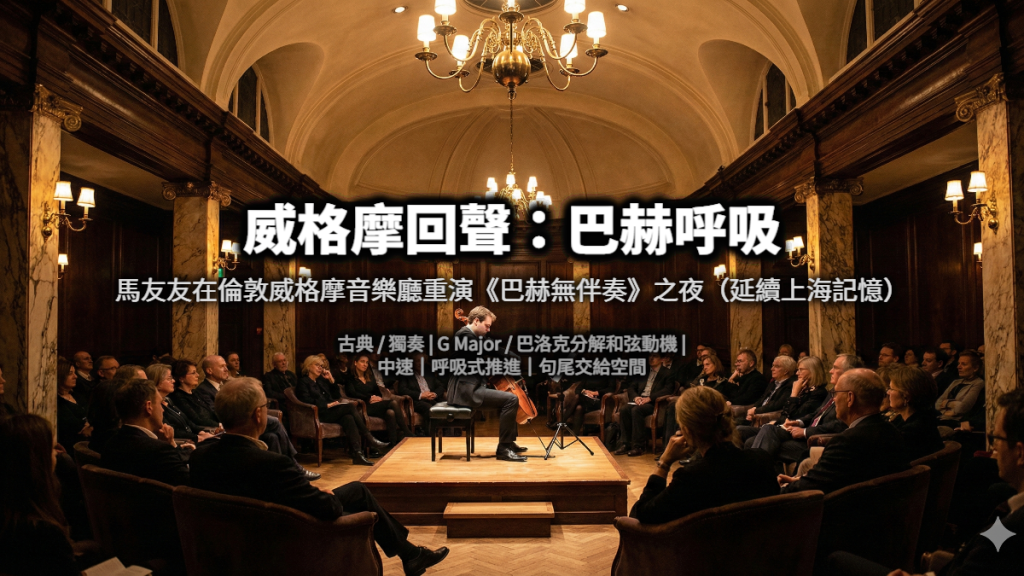
馬友友在倫敦威格摩音樂廳重演《巴赫無伴奏》之夜(延續上海記憶)
Lang: zh-TW
Mode: Instrumental
Audio Tracks
Creative Concept
【創作總動機】
延續我們在上海音樂廳的那首巴赫:同一段《第一號無伴奏大提琴組曲》Prelude,這一次把馬友友帶進倫敦威格摩音樂廳。這不是換場景而已,而是把「廳」當成第二位演奏者:威格摩的平面近似鞋盒型矩形,觀眾席在平坦的地毯地面上貼近舞台;上方是橢圓拱形天花,舞台背後還有圓筒形後殿與穹頂結構——這些凹面邊界共同塑造出它的招牌氣質:響亮、寬闊、回響卻清晰,尤其在陽台更明顯。於是,上海那種帶著歷史迴響的「大廳呼吸」,在威格摩會變成「近距離的真相」:弓毛摩擦、換把、指腹壓弦的微聲,都被溫柔放大,卻不被殘響遮掩。虛擬導師設定為坂本龍一:以極節制的結構觀,把「起音—回聲—停頓」視為同等重要的語彙,讓六分鐘不是縮短版本,而是一段被精準裁切、仍然完整收束的時間切片。
WP_Production_Specs: 【風格總則】
超寫真獨奏錄音感,模擬威格摩式的親密室內樂聲學:中頻殘響充足但不糊,早期反射清楚、聲像靠前;保留自然空氣與木質共鳴,避免電影式過度渲染。音樂語氣以「說話」取代「唱歌」:每個分解和弦都像一句短句,句尾讓空間接手。
WP_instructions: 【樂器】
-
大提琴音色:近距離、可聽見弓毛顆粒與木箱共鳴;低頻扎實但不轟,泛音自然閃爍
-
右手弓法:以弓速換取投射,壓力收斂;起音要清楚但不硬,句尾提早放開讓殘響完成連線
-
左手語氣:換把與滑音不必全抹除,但必須「被控制成標點」;音準像燈絲一樣穩定發光
-
空間策略:模擬小型傳奇獨奏廳的「近、亮、暖」:聽者彷彿在第七排正中,能同時聽到核心與回聲
【人聲】
None(不使用歌聲;若需氛圍僅允許極微弱空氣底噪,不可形成旋律)
WP_structure: 【結構與時間設計】
00:00–00:25 觀眾靜默與廳內空氣:像把鏡頭對焦在弓毛
00:25–01:40 Prelude 主動機建立:分解和弦如步伐,清楚起音、句尾交給殘響
01:40–03:10 密度段推進:連續音型更「說話」,用微小停頓塑形
03:10–04:35 內省段:動態下探到 pp,仍保持核心密度與近距離存在感
04:35–05:30 回歸與微變奏:同一材料換一種呼吸,讓空間的回聲成為第二聲部
05:30–06:00 最終收束:長延音+集體停頓完成結尾,不淡出,留白即終止
WP_SUNO_Tech: 【SUNO 高級技巧教學】
-
把「Hall ambience」寫進每個段落標籤括號內:描述地毯地面吸收腳步、座椅布料吃掉多餘高頻,讓模型生成更貼近室內樂廳質地
-
使用「close perspective」指令語彙:在 Style/段落描述中反覆強調弓毛顆粒、指尖摩擦、換把細節,讓聲音靠近而不變刺耳
-
在密度段(01:40–03:10)明確要求「micro-pauses」與「phrase punctuation」:避免模型把分解和弦拉成無呼吸的機械流
-
指定「balanced mid reverb, clear early reflections」並要求「no smear」:確保回響存在但不糊,維持威格摩式清晰
-
結尾必須寫「grand fermata + silence + stop」:防止自動淡出或提早結束,並在最後一段標籤強調集體停頓
-
若生成太“浪漫”,在 Style 加一句「minimal vibrato, speech-like articulation」:把語氣拉回巴赫式骨架
-
若生成太“乾”,在 Style 加一句「warm wood body resonance, gentle hall tail」:補回室內樂廳的柔光感
WP_SUNO_Tag: 【本曲必學的 SUNO 高級標籤】
[Intro][Hall Stillness] – 用廳內靜默建立「親密距離」,讓第一個音更像真實現場[Close Perspective] – 強化弓毛、指尖、木箱共鳴的微觀細節[Phrase Punctuation] – 用微停頓塑造語法,避免分解和弦變成流水帳[Balanced Reverb][No Smear] – 有殘響但不糊,保持清晰與空間同時存在[Micro-Dynamics] – pp 也要有核心密度,呈現室內樂廳的「近」[Grand Fermata] – 用長延音與停頓完成形式感結尾[No Fade Out] – 嚴格禁止淡出,確保正式終止
Production Specs
06:00
中速|呼吸式推進|句尾交給空間
G Major / 巴洛克分解和弦動機
大提琴(獨奏)
高端耳機聆聽、安靜房間獨聽、古典錄音鑑賞、展演前的情緒校準
Social (Short)
Social (Long)
威格摩的空間骨架本身就像一個聲學樂器:矩形的廳身並不追求宏偉,觀眾席在平坦的地毯地面上貼近舞台;上方是橢圓拱形天花,舞台後方還有圓筒形後殿與穹頂結構。這些凹面邊界讓聲音既能被聚攏、也能被擴散;因此它常被形容為一種特殊的平衡——響亮、寬闊、回響卻清晰,尤其在陽台的感受更為明顯。當你坐在這樣的廳裡,會產生一種很奇妙的錯覺:聲音不是從舞台傳來,而是從你周圍的空氣裡被點亮。
也正因如此,「演奏策略」在這裡變得格外殘酷。巴赫 Prelude 的分解和弦如果在大廳裡可以靠殘響把線條連起來,在威格摩卻更像是一次次近距離的問答:每個起音都必須坦白,每個句尾都不能虛應故事。馬友友的優勢也在此被放大——他並不靠誇張的力度或過度的揉弦去製造情緒,而是把情緒藏在弓速、弓壓、與極微小的停頓裡。你會聽見他如何在第一個和弦之後就把弓稍稍放開,讓回聲替他把句子補齊;你也會聽見他在密度段如何用幾乎不可察的微停頓,把連續音型變成語言,而不是運動。
六分鐘的回放,像是一段被精準裁切的時間切片:從觀眾靜默開始,直到最後一個音被長延音托住,再用集體停頓完成形式感結尾——不淡出,不偷懶,讓留白本身成為最終的句點。這就是威格摩最迷人的地方:它不允許你用「漂亮」遮掩,它逼你用「真實」說服。當同一首巴赫在這裡再次響起,你會明白我們為什麼說:這趟旅程不是巡演,而是在讓每一座音樂廳用自己的方式,重新寫一次記憶。
Lyrics & Structure
Wigmore Hall Echoes 威格摩回聲
[Flow][Arpeggio Conversation][Phrase Punctuation](01:05–01:40 The pattern continues as if the cello is speaking in short, confident sentences. Micro-pauses appear at natural commas: tiny releases that shape syntax and prevent mechanical rushing. The bow speed slightly increases on brighter notes, then eases on lower strings to preserve warmth. The room responds like a second voice—never louder than the cello, but always completing the gesture.)
[Development][Density and Direction][Micro-Dynamics](01:40–02:20 The arpeggios become denser, and the forward motion feels like walking with purpose. Dynamics rise and fall in small, human waves: a lean-in on a harmonic arrival, a softening on a passing tone. Left-hand shifts are present but controlled—audible as a graceful pivot rather than a flaw. The cello’s core remains centered, and the hall tail stays disciplined, avoiding any wash.)
[Texture][Fingerboard Truth][Close Perspective](02:20–03:00 The listener is drawn closer: subtle finger pressure changes, slight string contact noise, and careful releases at the ends of cells become expressive detail. The sound is vivid but refined, like a high-end live recording where realism is prized. The hall’s intimacy means every nuance matters; therefore the performance stays honest—no exaggerated vibrato, only speech-like inflection and steady intonation.)
[Pivot][Inner Calm][Balanced Reverb](03:00–03:40 A brief inward turn: dynamics soften toward pp, but the tone does not thin. The cello remains present, as if the listener is still in the first few rows. Notes hang in the air just long enough to glow, then dissolve into warm reflections. The performer’s breathing feels synchronized with phrase endings, allowing silence to function as musical material.)
[Reflection][Quiet Introspection][Micro-Dynamics][Phrase Punctuation](03:40–04:20 The arpeggios are now less about momentum and more about meaning. Each note is placed with care, and the space between notes becomes eloquent. The hall tail supports the line like soft velvet, but articulation stays crisp. Tiny rhythmic hesitations appear where a thought deepens—never enough to break pulse, only enough to reveal contemplation.)
[Return][Motif Re-illumination][No Smear](04:20–05:00 The opening material returns with subtle variation in emphasis: slightly different weight on downbeats, slightly altered bow distribution, as if the same sentence is spoken with new understanding. The cello’s resonance feels warmer, and the early reflections give a gentle sense of closeness. The hall remains a partner, stitching notes together while preserving the grain of each attack.)
[Build][Focused Crescendo][Controlled Energy](05:00–05:30 Energy gathers for a final statement: crescendos are modest and disciplined, aimed at clarity rather than volume. The performer releases phrase endings earlier, letting the room provide the bloom. The sound remains grounded, never cinematic, never overblown—just a firm, luminous insistence that the musical argument is nearing completion.)
[Ending][Final Cadence][No Fade Out](05:30–06:00 The closing gesture arrives with formal certainty: a clean articulation, a sustained final resonance held in a grand fermata, and then a deliberate, shared silence. The hall tail is allowed to finish naturally, and when it ends, everything stops—no fade, no continuation, only a complete, intentional termination that feels like a period at the end of a perfectly spoken paragraph.)
