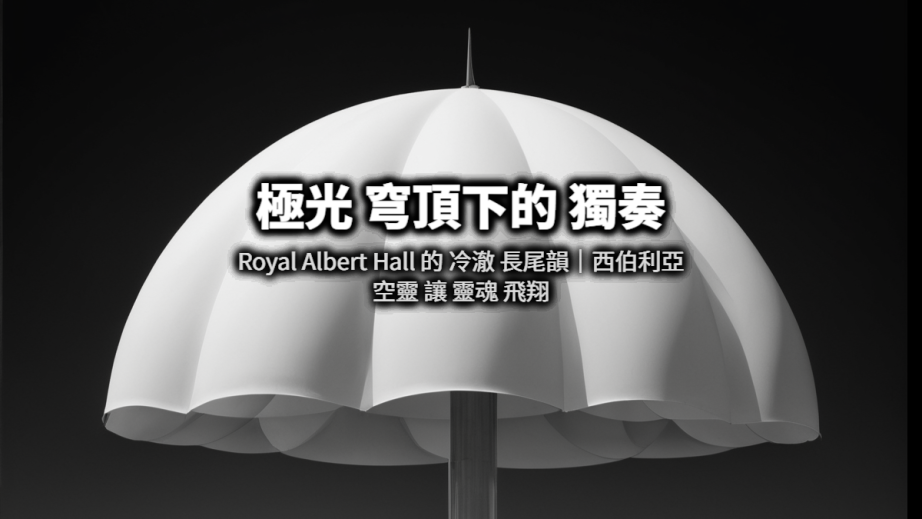
Cinematic Classical|Solo Cello
極光穹頂下的獨奏
這兩首曲子,是接受好友Christina訂製,”灵魂,自由,飞翔, 西伯利亚”,我去掉巴赫,放馬友友自由,加上靈魂,我覺得更好,一個時代有一個時代的自由,AI時代,我們可以更自由,請大家欣賞!
推薦 track 2, 然而track 1 有特別的效果,很有趣。
Royal Albert Hall 的 冷澈 長尾韻|西伯利亞 空靈 讓 靈魂 飛翔
Lang: zh-TW
Mode: Instrumental
Audio Tracks 推薦 track 2, 然而track 1 有特別的效果,很有趣。
Creative Concept
WP_VERSION: SMCA_v3.4
WP_LANG: zh-TW
WP_MODE: Instrumental
WP_Title: 極光 穹頂 下 的 獨奏
WP_Subtitle: Royal Albert Hall 的 冷澈 長尾韻|西伯利亞 空靈 讓 靈魂 飛翔
WP_Slug: arctic-dome-solo-cello
WP_Category: Cinematic Classical|Solo Cello
WP_Tags: 獨奏大提琴, 極地音色, 巴洛克骨架, Royal Albert Hall, 西伯利亞空靈, 自然泛音, 近距離顆粒, 長尾殘響, 冰晶閃光, 靈魂飛翔, 無配器限制
WP_Excerpt: 以 巴洛克 的 骨架 建立 清晰 的 句法,卻 讓 聲音 像 西伯利亞 的 冷空氣 一樣 透明 可穿透;在 Royal Albert Hall 的 巨大 空間 裡,殘響 如 雲 層 擴散,近距離 的 弓毛 顆粒 與 指尖 壓弦 又 把 你 拉回 舞台 前緣,最後 以 堅定 的 終止式 讓 靈魂 真正 起飛 並 完整 落地。
WP_TargetDuration: 06:40–07:40
WP_TempoFeel: slow|穩定 推進(像 冰面 上 的 長步伐)
WP_KeyCenter: D Minor → D Dorian(冷澈 明亮 的 模態 漂移)
WP_CoreInstruments: Solo Cello, Close Mic Texture, Far Hall Mics, Natural Harmonics Layer, Controlled Bow Noise, Convolution Hall Tail
WP_SonicKeywords: arctic, airy, baroque, spacious, intimate, crystalline, resonant, cinematic
WP_AudienceUseCase: 深夜 耳機 沉浸|冥想 呼吸|競賽 影像 配樂|城市 漫步 的 內在 升空
WP_Creative_Concept: 【創作總動機】
這 首 曲子 的 起點 是「西伯利亞 空靈」:那 種 乾淨 到 幾乎 透明 的 冷空氣,讓 音符 不必 被 情緒 裝飾,仍 能 直直 穿透 皮膚,推動 靈魂 自由 飛翔。場景 被 鎖定 在 Royal Albert Hall London city:巨型 穹頂 與 圓形 包覆 的 空間,讓 每 一 個 音 的 尾韻 像 雲 一樣 往 上 擴散,再 慢慢 落回 觀眾席 的 呼吸。整體 以「巴洛克 骨架」做 句法:清楚 的 動機、對稱 的 回應、可辨識 的 終止式;但 音色 走「極地 音色」:冷澈、明亮、堅定、可穿透。
在 心法 上,設定 一位「虛擬 導師」為 坂本 龍一:他 的 極簡 與 空白 哲學 提醒 我們——不要 用 情緒 填滿,讓 空間 自己 說話;同時 我 對 馬友友 的 演奏 風格 提出 挑戰:不 依賴 濃厚 浪漫 的 甜美 延音,改用 更 冷 的 透明度、更 精準 的 起音、更 節制 的 vibrato,把「飛翔感」交給 殘響 與 泛音 的 光,而 不是 交給 過度 的 表情 拉扯。這 不是 反對 溫暖,而是 要 在 冰 之 中 留住 木質 核心:像 凍土 深處 的 共鳴,穩、深、慢慢 抬升,直到 終點 一口 氣 定住,完整 收束。
WP_Production_Specs: 【風格總則】
「巴洛克骨架 × 極地音色」的超寫真獨奏。聲學必須呈現 Royal Albert Hall 的巨大空間感:長尾韻、寬廣包覆、上方雲層般的擴散,但同時用近距離細節(弓毛顆粒、指尖壓弦、換把氣息)把聽者拉回到舞台前緣。整體避免過度浪漫化;情緒應像寒冷的清澈:明亮、堅定、可穿透。
WP_instructions: 【樂器】
右手:以「弓速」創造 投射、以「壓力 收斂」避免 在 大廳 裡 變得 笨重;起音 清楚 但 不硬,句尾 提早 放開,把 連線 交給 殘響
音色:主體 維持 溫暖 木質 與 低中頻 核心;局部 加入 sul ponticello 的 冰晶 閃光(短 而 克制)
泛音:在 段落 轉折 以 自然 泛音/輕觸 泛音 像 極光 掠過 穹頂;不可 形成 炫技,必須 服務「飛翔感」
低音:開放弦 與 低把位 要 像 凍土 深處 的 共鳴,穩、深、慢慢 抬升
微噪音:保留 可控 弓毛 顆粒 與 換把 聲,作為 風雪 質地;但 不得 喧賓奪主
空間:想像 頭頂「蘑菇」擴散板 把 聲音 打散 成 雲;演奏 需 更 信任 尾韻,不用 把 每個 音 拉滿
WP_vocals: 【人聲】
None(純器樂;僅保留 空間 與 微噪音 的 氣息 質地)
WP_structure: 【結構與時間設計】
Intro 00:00–01:10:極地 空氣 入場;低把位 與 開放弦 打底,讓 大廳 尾韻 先 建起「雲」
Development A 01:10–02:55:巴洛克 句法 成形;短 動機 反覆 變形,起音 更 清楚,句尾 交給 殘響 延伸
Development B 02:55–04:40:加入 冰晶 閃光;短促 克制 的 sul ponticello 與 泛音 像 極光 掠頂,仍 保持 不炫技
Climax 04:40–06:20:音域 拉高、投射 增加;以 弓速 推進、壓力 收斂,讓 「飛翔感」在 巨廳 裡 立體 展開
Ending 06:20–07:40:收回 到 堅定 冷澈;以 清楚 的 終止式 與 長尾韻 共同 完成「完整 落地」,拒絕 淡出
WP_SUNO_Tech: 【SUNO 高級技巧教學】
-
在 Style 明確 寫入 並 加強 限制語:用「solo cello only」固定 編制,再 用「no pads, no percussion」重複 一次,抑制 自動 配器 與 節奏 元素。
-
用 結構 標籤 把「空間」當 成 一個 會 變形 的 角色:在 轉段 標籤 內 直接 描述「hall tail blooms upward like clouds」,模型 會 更 願意 拉長 尾韻 而 非 加聲部。
-
想要 近距離 顆粒:在 段落 標籤 內 指定「close mic bow hair grain, audible shifting, controlled finger pressure」,並 同時 提醒「not dominant」,避免 噪音 失控。
-
要 冰晶 閃光 但 不炫技:在 sul ponticello / harmonics 段落 寫「short, restrained, used only as transition color」,可 降低 連續 花式 泛音 的 機率。
-
讓 巴洛克 骨架 站住:在 中段 指定「clear motif, balanced phrases, cadence markers」,並 在 高潮 前 提醒「no romantic swelling」,保持 冷澈 堅定。
-
防止 提早 結束:在 倒數 兩段 明確 寫「extend resonance after each phrase, do not end early; final cadence must be conclusive」,並 在 最後 段 使用「grand fermata / no fade out」語意。
-
要「飛翔感」而 非 堆疊:把 高潮 描述 為「vertical lift in space」與「harmonic glow」而 不是「bigger instrumentation」,模型 會 用 音域 與 動態 解決。
WP_SUNO_Tag: 【本曲必學的 SUNO 高級標籤】
[Intro][Atmospheric Buildup] – 讓 大廳 尾韻 先 成為 雲層,建立 Royal Albert Hall 的 空間 角色。[Close Mic Detail] – 指定 弓毛 顆粒、換把、指壓,創造 舞台 前緣 的 觸感。[Arctic Harmonics] – 以 泛音 作為 極光 掠頂 的 光,不 炫技、只 服務 轉折。[Sul Ponticello Flash] – 冰晶 閃光 的 短色彩;克制、點到為止。[Baroque Skeleton] – 強化 句法、動機、終止式,確保 結構 清楚。[Hall Bloom] – 讓 聲音 往 上 擴散,形成 包覆 的 穹頂 感。[Final Cadence][No Fade Out] – 強制 完整 收束;拒絕 淡出,競賽 感 更 強。
WP_Social_Short: 【社群貼文(短)】
在 Royal Albert Hall 的 穹頂 下,只有 一把 大提琴,像 西伯利亞 的 冷澈 空氣 讓 靈魂 起飛 ❄️🎻✨ 長尾韻 如 雲,近距離 顆粒 如 風雪。
WP_Social_Long: 【社群貼文(長)】
如果 你 曾 經 在 冬夜 走進 一個 巨大 的 建築,抬頭 看見 穹頂 像 天幕 一樣 把 你 包起來,你 會 明白 什麼 叫「聲音 也 能 變成 天氣」。這 首《極光 穹頂 下 的 獨奏》把 場景 放在 Royal Albert Hall London city:那 種 以 空間 著名 的 大廳,不是 只是「很 大」,而是 會 讓 每 一 個 音 的 尾韻 往 上 飄、往 外 擴散,像 雲層 在 你 頭頂 慢慢 展開。
但 我 不想 只 做 一首「好聽 的 大廳 錄音」。我 想 要 的 是 西伯利亞 的 空靈:冷、乾、透明,透明 到 你 會 感覺 音符 沒有 被 情緒 染色,卻 更 清楚。於是 這 首 曲子 的 情緒 被 設計 成「寒冷 的 清澈」——明亮、堅定、可穿透。它 不 用 過度 浪漫 的 甜美 拉扯,反而 用 更 精準 的 起音、更 節制 的 句尾、更 可信任 的 殘響,讓 你 聽見「自由 飛翔」不是 失重 的 飄,而是 在 空氣 裡 有 方向 的 上升。
技術 上,這 首 作品 以「巴洛克 骨架」作為 隱形 的 地圖。巴洛克 的 美 在 於 句法:動機 清楚、回應 對稱、終止式 有 交代。這 讓 獨奏 不會 變成 漫無 目的 的 氛圍 長音,而是 一段 有 推進、有 呼吸 的 旅程。你 會 聽到 一個 小小 的 核心 動機 不斷 回來:有時 在 低把位 像 凍土 深處 的 共鳴,有時 在 中音域 變得 更 清澈,最後 再 被 拉到 高處,像 極光 的 光帶 掠過 穹頂。
同時,這 首 曲子 又 不停 把 你 拉回「舞台 前緣」。很多 人 以為 只有 大空間 才 能 帶來 神聖 感,但 我 反而 相信:真正 的 沉浸 是「遠」與「近」同時 存在。於是 我 要求 近距離 細節 被 保留:弓毛 顆粒 的 摩擦、指尖 壓弦 的 微小 抖動、換把 時 的 氣息 與 位置 變化。這些 不 是 瑕疵,而是 風雪 的 質地——讓 你 知道 這 一切 不是 幻覺,而是 一個 真實 的 人 在 拉 一把 真實 的 樂器。當 你 在 耳機 裡 聽見 那些 細節,又 同時 被 विशाल 的 尾韻 包住,你 會 產生 一種 奇妙 的 雙重 感:你 既 在 大廳 的 中央,也 幾乎 坐在 演奏者 的 前方。
色彩 的 轉折 主要 來自 兩種 手法:其一 是 泛音。自然 泛音 或 輕觸 泛音 被 放在 段落 的 門口,像 極光 掠過 的 一道 光,提醒 你「空間 在 變」。但 它 絕不 炫技,因為 這 首 曲子 的 核心 不是 展示,而是 讓 靈魂 更 輕。其二 是 sul ponticello 的 冰晶 閃光:短、克制、像 冰面 反射 的 一瞬,立刻 又 回到 溫暖 木質 的 低中頻 核心。這 種 來回 是 關鍵:如果 全程 都 冷,會 變成 距離;如果 全程 都 暖,又 會 變成 浪漫。這 首 曲子 要 的 是 冷中 有 木、清澈 但 不 玻璃。
最後,作品 的 結尾 必須「完整 落地」。很多 氛圍 音樂 喜歡 淡出,彷彿 把 你 留在 半空。可是 我 想 要 的 自由,是 飛起來 之後 還 能 自己 決定 何時 降落。於是 終點 會 出現 清楚 的 終止式,像 在 巨大 的 穹頂 下 站定 的 一步:殘響 依然 很 長,但 方向 已經 釘住。當 那個 最後 的 音 停在 空中,你 會 感覺 自己 不再 漂,而是 被 清醒 地 擁抱。那 就是 我 對「讓 靈魂 自由 飛翔」的 回答:不是 逃離,而是 在 冷澈 的 光裡,獲得 一次 堅定 的 完整。
WP_CoverImage: 【封面圖生成提示】
Ultra-realistic cinematic cover: a single lacquered cello standing on an empty stage inside Royal Albert Hall, viewed from the front row, with the vast domed ceiling dissolving into aurora-like polar lights and icy cloud diffusion above; cold, crystalline air particles floating in the spotlight; minimal color palette of deep midnight blue, frosted silver, and warm wood amber; high contrast, sharp micro-detail on bow hair texture and fingerboard grain; expansive negative space; photoreal lighting, 8k, dramatic but restrained, no text, no people.
WP_Reference: 【研究參考(簡短)】
-
關鍵搜尋詞:Royal Albert Hall acoustics long reverb tail / concert hall diffusion dome
-
關鍵搜尋詞:solo cello close mic bow noise artistic use / controlled performance noise
-
關鍵搜尋詞:Baroque phrasing cadence structure in solo string works
-
關鍵搜尋詞:sul ponticello color restraint / natural harmonics as transition color
-
類型:大廳 殘響(convolution reverb)與 近距離 麥克風 拾音 的 混音 取捨 文章
Production Specs
Technical Data
06:40–07:40
slow|穩定 推進(像 冰面 上 的 長步伐)
D Minor → D Dorian(冷澈 明亮 的 模態 漂移)
Solo Cello, Close Mic Texture, Far Hall Mics, Natural Harmonics Layer, Controlled Bow Noise, Convolution Hall Tail
深夜 耳機 沉浸|冥想 呼吸|競賽 影像 配樂|城市 漫步 的 內在 升空
Lyrics & Structure
Aurora Under the Dome 極光 穹頂 下 的 獨奏
[Close Mic Detail][Front Edge Texture](Bring the listener closer: emphasize controlled micro-noise—bow hair granularity, gentle left-hand finger pressure shifts, and a subtle, human repositioning sound as the hand changes position. Keep these noises as snowfall texture, never louder than the pitch. The hall remains huge above: the dome diffuses the sound into a soft canopy. The emotional temperature is cold-clear, bright, and resolute, not sentimental.)
[Development A][Motif Variation][Cadence Markers](Vary the motif with small interval changes and baroque-style sequencing, preserving symmetry. The cello line feels like architectural steps beneath a dome: each step is precise, and each landing point hints at a cadence. Use a stable rhythmic pulse implied through bow changes rather than percussion. Dynamics widen, but the body of tone stays lean and transparent; no romantic rubato excess—just controlled, purposeful breathing between phrases.)
[Transition][Arctic Harmonics][Aurora Sweep](At the first major turn, allow natural harmonics and light-touch harmonics to appear like a thin aurora ribbon skimming the ceiling. The harmonic shimmer is brief, restrained, and functional: it signals a doorway into the next section, not a display. Let the hall tail glow around the harmonics, a halo that rises upward like cloud diffusion. Immediately return to the warm core tone so the piece never becomes glassy or detached.)
[Development B][Sul Ponticello Flash][Ice-Crystal Color](Introduce sul ponticello for short, controlled flashes only: a crystalline edge that appears for a moment, then disappears. Keep the bow speed higher for projection but avoid pressing; the result should be icy sparkle without harshness. Each flash is tied to a structural pivot—end of a phrase, start of a new sequence—then the cello returns to normal contact point to preserve the grounded wooden body. The hall remains enormous, and the reverb tail remains long, enveloping, and cloud-like.)
[Expansion][Register Lift][Vertical Flight](Raise the line gradually into higher register, not by adding instruments but by widening space and increasing vertical imagery. The sensation is “flight”: the melody climbs with steady intention, and the hall tail lifts it overhead. Maintain clarity of attacks; keep vibrato restrained or minimal, using purity of pitch as brightness. The close mic still captures finger transitions and subtle breaths, keeping the listener at the stage edge while the far mics paint the dome’s vastness.)
[Climax][Wide Dynamics][Piercing Clarity](Reach the emotional peak through projection and phrasing rather than melodrama. Bow speed increases to throw sound into the hall; bow pressure stays collected to avoid heaviness. The motif is now unmistakable, enlarged by register and resonance. Include a brief aurora harmonic signpost—one more harmonic sweep that glints like polar light across the ceiling—then land into a strong cadence marker. The hall tail blooms intensely, wrapping the listener in a wide, overhead cloud, while the core tone remains warm, steadfast, and penetrating.)
[Release][Cold-Clear Calm][Resonant Afterglow](Let the intensity fall away without collapsing. Use longer spaces between phrases, trusting the hall to speak. The cello returns to mid and low register with permafrost-depth resonance: open strings and first-position weight feel like stable ground. Micro-noise remains present as wind-snow texture—gentle bow grain, soft shifts—kept controlled and secondary. The baroque skeleton becomes more obvious again: balanced phrases, clear punctuation, and a calm, unwavering emotional temperature.)
[Preparation][Final Approach][Cadence Architecture](Prepare the ending with deliberate cadence architecture: a sequence that points clearly toward resolution. Each phrase ends slightly early, handing the connective tissue to the reverb. The listener feels the dome overhead like a “mushroom” diffuser scattering sound into clouds, while the close mic keeps the tactile front-row intimacy. Avoid any added layers or implied accompaniment; sustain the single-line authority of the solo cello.)
[Ending][Final Cadence][No Fade Out](Deliver a conclusive final cadence with a grand fermata: a clean, decisive landing note that is fully formed, not softened into a fade. Allow the hall tail to ring long and complete, but the musical statement must end unmistakably—final, formal, resolved. Keep the last resonance cloud suspended overhead, then let it naturally finish without any artificial fade-out behavior; the piece closes as a complete architectural arc, ending with certainty and silence.)
