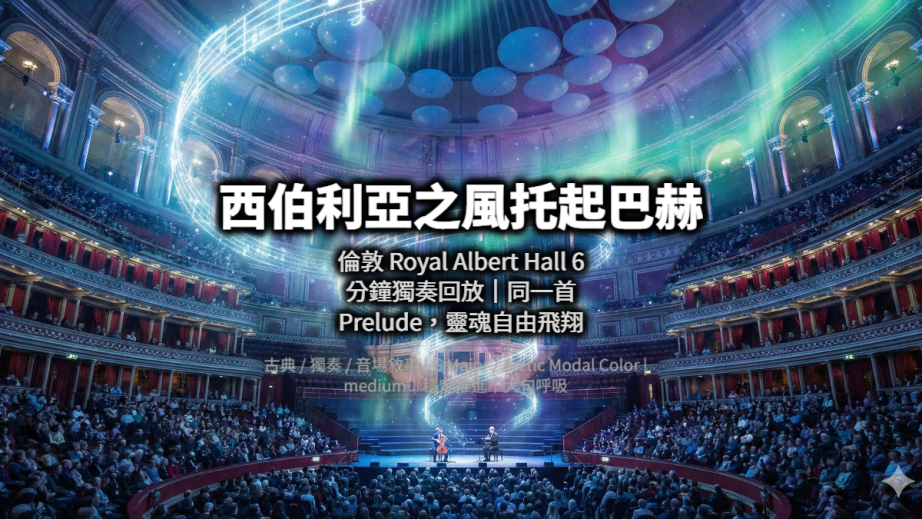
古典 / 獨奏 / 音場敘事
皇家穹頂之下:西伯利亞之風托起巴赫
這兩首曲子,是接受好友Christina訂製,”灵魂,自由,飞翔, 西伯利亚”,我今天2026.1.30主場是巴赫+馬友友,現在要加上自由,有點為難SUNO。但我覺得還可以,請大家欣賞!
倫敦 Royal Albert Hall 6 分鐘獨奏回放|同一首 Prelude,靈魂自由飛翔
Lang: zh-TW
Mode: Instrumental
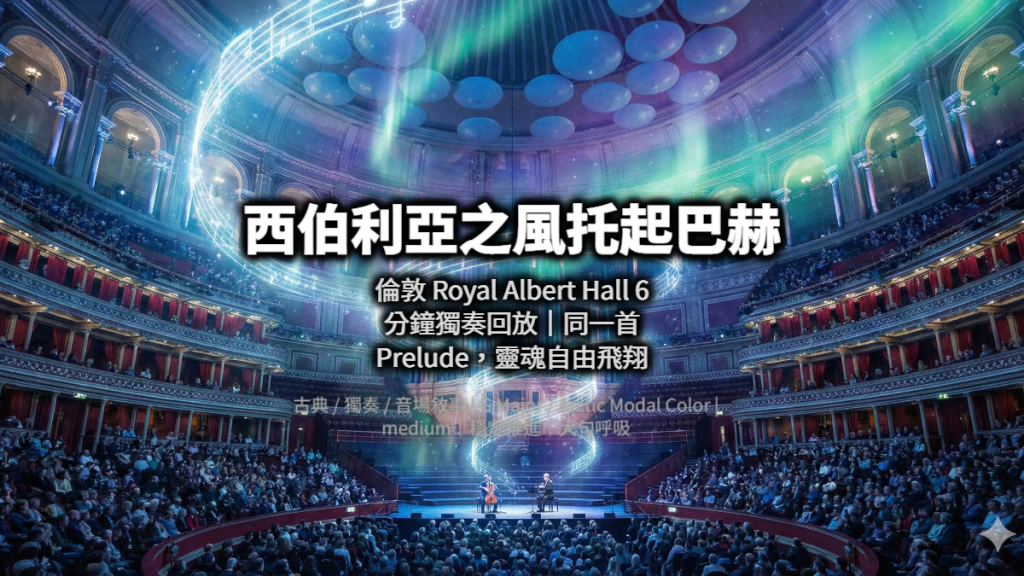
“Royal Albert Hall interior under the great dome with iconic suspended acoustic ‘mushrooms’, a single cellist on stage illuminated by warm golden light, Siberian aurora-like glow subtly reflected in the ceiling, snow-dust particles in the air, hyper-realistic cinematic photography, ultra-detailed wood and marble textures, majestic scale, intimate emotional focus”
Audio Tracks
Creative Concept
WP_AudienceUseCase: 高解析耳機鑑賞、音響系統展示、展演前引導冥想、劇場開場氛圍
WP_Creative_Concept: 【創作總動機】
延續上海那首《巴赫第一號無伴奏大提琴組曲》Prelude:樂譜不變,但「空間」改寫了音樂的物理命運。威格摩像耳語,Royal Albert Hall 則像天空——橢圓巨廳與高聳穹頂把聲音拉成長弧線,歷史上甚至因回聲過強而聞名,後來在穹頂下方加裝了著名的「蘑菇」擴散板,把原本尖銳的回聲打散成更可用的雲層。於是,這一次的主動機不再只是巴赫的和聲秩序,而是「西伯利亞的聲音」:乾冷、透明、帶著風雪顆粒與極光般的泛音。馬友友的琴在這裡不是把旋律說清楚就夠了,而是要讓每一次起音都像踏雪、每一次句尾都像風把尾韻托上去——讓靈魂自由飛翔。虛擬導師設定為蘇菲亞・古拜杜麗娜:以靈性與音色雕塑的思維,把“空白”“殘響”“停頓”視為同等重要的音符;因此六分鐘不是剪輯,而是把巴赫的骨架放進北方氣候與穹頂聲學,形成一個可被記憶反覆召喚的聲音儀式。
WP_Production_Specs: 【風格總則】
「巴洛克骨架 × 極地音色」的超寫真獨奏。聲學必須呈現 Royal Albert Hall 的巨大空間感:長尾韻、寬廣包覆、上方雲層般的擴散,但同時用近距離細節(弓毛顆粒、指尖壓弦、換把氣息)把聽者拉回到舞台前緣。整體避免過度浪漫化;情緒應像寒冷的清澈:明亮、堅定、可穿透。
WP_instructions: 【樂器】
-
右手:以「弓速」創造投射、以「壓力收斂」避免在大廳裡變得笨重;起音清楚但不硬,句尾提早放開,把連線交給殘響
-
音色:主體維持溫暖木質與低中頻核心;局部加入 sul ponticello 的冰晶閃光(短而克制)
-
泛音:在段落轉折以自然泛音/輕觸泛音像極光掠過穹頂;不可形成炫技,必須服務“飛翔感”
-
低音:開放弦與低把位要像凍土深處的共鳴,穩、深、慢慢抬升
-
微噪音:保留可控弓毛顆粒與換把聲,作為風雪質地;但不得喧賓奪主
-
空間:想像頭頂「蘑菇」擴散板把聲音打散成雲,演奏需更信任尾韻,不用把每個音拉滿
WP_vocals: 【人聲】
None(僅允許極微弱舞台空氣底噪;不得有人聲吟唱)
WP_structure: 【結構與時間設計】
00:00–00:25 穹頂靜默:先讓空間成形,像抬頭看見雲層
00:25–01:40 Prelude 主動機起飛:清楚起音、早放句尾,讓尾韻托起連線
01:40–03:10 風雪推進段:密度增加、微停頓塑形,音色偶爾冰晶化
03:10–04:35 極光內省段:pp 仍有核心密度,泛音像光帶滑過
04:35–05:30 回歸與擴張:同一材料更寬闊、更有“飛翔高度”
05:30–06:00 最終落點:長延音+大休止完成形式,不淡出,正式終止
WP_SUNO_Tech: 【SUNO 高級技巧教學】
-
先在 Style 明確寫「solo cello only」並重複一次「no pads, no percussion」:防止模型自動加配器
-
要求「large dome hall, diffuse ceiling reflections」同時加一句「keep articulation clear, no smear」:讓大空間不吞字
-
指定「close perspective blended with hall pickup」:用近距離細節鎖定“人”的存在,再把穹頂尾韻鋪開
-
在 01:40–03:10 段落標籤中加入「wind-grain bow texture」:把弓毛顆粒轉化成西伯利亞風雪質地
-
在 03:10–04:35 段落加入「harmonic aurora glints, brief and controlled」:讓極光感出現但不炫技
-
結尾段落必寫「grand fermata + silence + stop, no fade out」:避免早停或淡出
-
若生成過甜:加「minimal vibrato, speech-like phrasing」;若生成過乾:加「warm woody body resonance, supportive mid reverb tail」
WP_SUNO_Tag: 【本曲必學的 SUNO 高級標籤】
[Dome Hall Diffusion] – 用擴散而非單一回聲表現穹頂空間[Close Perspective] – 把弓毛顆粒與指尖細節拉近,抵消大廳距離感[Wind-Grain Texture] – 以可控噪音模擬西伯利亞風雪顆粒[Harmonic Aurora] – 泛音短閃如極光,點亮高空而不炫技[No Smear Articulation] – 長尾韻下仍保持起音清晰與語法[Grand Fermata][No Fade Out] – 以正式停頓完成形式結尾
WP_Social_Short: 【社群貼文(短)】
在皇家穹頂下,巴赫被西伯利亞的風托起。🎻❄️✨
WP_Social_Long: 【社群貼文(長)】
我們把同一首巴赫帶進倫敦的另一個世界——Royal Albert Hall。若說威格摩是把你拉到舞台前,讓你聽見弓毛像耳語那樣貼著皮膚;那麼皇家阿爾伯特音樂廳則把你放進一座巨大的圓形天體:抬頭是高聳穹頂,空氣像有形的容器,聲音在裡面不是直線,而是弧線。這座音樂廳的歷史甚至與「回聲」糾纏在一起:早年因穹頂造成的回音太強而飽受討論,後來在穹頂下方加裝了著名的「蘑菇」擴散板,像一群懸浮的圓盤,把聲音打散成更均勻、更可用的雲層。當你坐在裡面,會明白這不是一般的殘響,而是一種“上方的空間”:音色會被抬起來,尾韻會被托住,任何一個句尾如果不懂得放手,就會變得厚重、甚至黏連。
因此,我們延續上海那首《無伴奏大提琴組曲》Prelude,卻用一個新的主動機去照亮它——「西伯利亞的聲音」。這不是把民謠旋律硬塞進巴赫,而是把氣候寫進音色:乾冷的透明、風雪的顆粒、極光的短閃,以及凍土深處那種緩慢而堅定的共鳴。馬友友的琴在這裡要做兩件看似矛盾的事:一方面要非常“近”,讓觀眾在五千多人的大廳裡仍然聽見人的存在——弓毛的摩擦、左手換把的語氣、指尖落點的重量;另一方面又要非常“遠”,信任空間,把句尾交出去,讓穹頂與擴散板接手,把音符延展成飛翔的高度。
技術上,最關鍵的是右手:用弓速而不是壓力去取得投射,起音要清楚但不硬;句尾要比直覺更早放開,讓尾韻自然托起連線。中段密度增加時,微小停頓必須像標點一樣精準,否則在大空間裡會變成無意義的流動。到了內省段,pp 不能只是小聲,而必須有核心密度——像寒夜裡一盞燈,光不大,但非常穩。偶爾的泛音與靠橋音色,像極光在穹頂上掠過,只出現一下就消失,留給聽者的是“被抬起”的感覺,而不是炫技的眩光。
這就是為什麼我說:這趟旅程比比賽更難。比賽在台上,而記憶在耳朵裡。當我們把同一首巴赫帶進不同音樂廳,不是換一個背景圖,而是讓空間成為第二位演奏者。Royal Albert Hall 的挑戰,是把浩瀚變成自由:讓聲音不被回聲拖住,而是被回聲托起。最後的長延音與大休止不淡出、不偷懶——音停、空氣還在,然後一切正式終止。那一刻,你會覺得靈魂真的飛了一下:不是逃離,而是被理解的輕。
WP_CoverImage: 【封面圖生成提示】
“Royal Albert Hall interior under the great dome with iconic suspended acoustic ‘mushrooms’, a single cellist on stage illuminated by warm golden light, Siberian aurora-like glow subtly reflected in the ceiling, snow-dust particles in the air, hyper-realistic cinematic photography, ultra-detailed wood and marble textures, majestic scale, intimate emotional focus”
WP_Reference: 【研究參考(簡短)】
-
Royal Albert Hall 官方:Mushrooms(穹頂下「蘑菇」擴散板的歷史與配置)
-
Wikipedia:Royal Albert Hall(容量 5,272、穹頂與回聲歷史、整修時段)
-
Wikimedia Commons:Acoustic mushrooms(1969 安裝纖維玻璃圓盤以抑制回聲的說明)
-
WIRED:Royal Albert Hall acoustic renovation(回聲問題與後續聲學改善脈絡)
06:00
medium|穩定推進|大句呼吸
G Major / Arctic Modal Color
Solo Cello, Natural Harmonics, Sul Ponticello Color, Col Legno Whisper, Hall Ambience
高解析耳機鑑賞、音響系統展示、展演前引導冥想、劇場開場氛圍
Lyrics & Structure
Dome of Flight Royal Albert Hall 皇家穹頂之下
[Motif Flight][Arpeggio as Footsteps Turning to Wind](00:55–01:40 Maintain steady forward motion, but release note tails slightly early so the dome’s diffuse reflections connect the line. The sound should feel as if it lifts upward after each stroke, a soft “updraft” created by the room. Keep dynamics modest—clarity over volume—so the large space never turns the phrase into a wash.)
[Wind-Grain Section][Siberian Texture Without Extra Instruments](01:40–02:25 Increase density while preserving micro-pauses at phrase turns. Add a controlled “wind-grain” quality by allowing tasteful bow noise in the background of the tone—like fine snow in the air—never harsh, never dominant. The cello remains the only source, but the atmosphere suggests cold, open horizons.)
[Ceiling Diffusion][Cloud of Reflections][No Smear](02:25–03:10 Emphasize the sensation of overhead diffusion: reflections should feel scattered and softened, not a single slapback. Keep attacks defined and transitions clean so arpeggios remain legible. The listener should hear the room as a gentle, floating canopy above the cello rather than a distinct echo. Maintain warmth in the core while the space expands.)
[Aurora Glints][Harmonic Shimmer][Brief and Controlled](03:10–03:55 Introduce brief natural harmonics and subtle sul ponticello color as short flashes—aurora-like glints that appear and disappear quickly. These moments should illuminate the upper air of the hall, suggesting northern light crossing the dome. Keep them disciplined, returning immediately to the warm central tone so the piece stays grounded.)
[Introspection][pp with Density][Human Proximity in a Huge Hall](03:55–04:35 Drop dynamics toward pp, but do not thin the sound. The cello remains close and present, as if the listener is still near the stage despite the hall’s scale. Let silences and micro-pauses become expressive material; the room tail carries the phrase forward like a quiet wingbeat.)
[Return and Expansion][Same Bach Material, Greater Altitude](04:35–05:15 Reintroduce the main arpeggio flow with slightly wider phrasing and a sense of increased “height.” Keep bow pressure restrained and use bow speed for projection. The hall bloom becomes more luminous, as if the music is now fully airborne. Maintain clarity and avoid romantic excess; this is flight by precision, not by force.)
[Cadential Approach][Formal Clarity][Energy Gathered, Not Forced](05:15–05:30 Prepare the closing with controlled crescendos that feel like spoken emphasis. Release phrase endings early so the dome completes the resonance. Ensure pitch center stays steady and the low-mid core remains anchored, preventing the hall from turning the cadence into indistinct rumble.)
[Ending][Final Cadence][Grand Fermata][No Fade Out](05:30–06:00 Deliver a decisive final articulation, then sustain a held resonance that fills the dome like a single beam of light. Allow the diffuse ceiling field to shimmer briefly, then stop completely—no fade, no continuation. Hold a ceremonial silence after the decay, as if the hall itself is listening back. End with full formal completion, a real stop, and a clear period of stillness.)
